AI and Technology9 min read
Best Open-Source AI Video Models 2026: What Is Really Open
Wan 2.2 is the open video model to download first in 2026. We compare the main open-weight models on license, territory, VRAM, and run a real test.
Try it on Merlio:make video without a GPU in Merlio
If you want one open-source AI video model to download in 2026, get Wan 2.2 TI2V-5B. It's Apache 2.0, it has no revenue cap and no country list, and it makes 720p clips on a single 24GB card. The catch with everything else: "open" can mean three different things. Open weights means you can download the files. Open license means you can use them commercially without asking. Open territory means the license actually covers where you live. Plenty of models that get called open fail the second or third test, and the newest Wan (3.0) fails the first one.
Our pick, November 2026: Wan 2.2 TI2V-5B to start. LTX-2.5 if you need sound and your company makes under $10M a year. Skip HunyuanVideo 1.5 if you're in the EU, UK or South Korea. MiniMax H3 is open on paper but needs a multi-GPU server, and US, EU, UK and Korean users have to apply for a license first.
Is Wan 3.0 open source? No
This is the mistake we saw most while checking the pages that rank for this topic. A lot of them say Wan 3.0 is Apache 2.0 with 1.3B and 14B checkpoints. We looked at the Wan-AI organization on Hugging Face through its API on November 25, 2026. The newest repos are Wan2.2-Animate-2-14B and Wan-Dancer-14B from July 2026, plus Diffusers copies of Animate-2 in August. There is no 2.5, 2.6, 2.7 or 3.0 repo.
| Wan version | Released | Can you download it? |
|---|---|---|
| 2.1 | Feb 2025 | Yes, Apache 2.0 |
| 2.2 | July 28, 2025 | Yes, Apache 2.0 |
| 2.5-preview | Sept 24, 2025 | No, API only |
| 2.6 | Dec 16, 2025 | No, API only |
| 2.7 | Apr 2026 | No, API only |
| 3.0 | Aug 2026 (public beta) | No, API only (Alibaba Cloud Model Studio) |
Timeline from howaiworks.ai, checked against the Hugging Face API. Alibaba has never announced that it will open the newer versions, and no files have shipped. So Wan 2.2 is the newest Wan you can actually run yourself.
The open-weight video models worth running in 2026
Checked on November 25, 2026 against each model's repo, model card and license. Hosted prices are fal.ai's list prices on that day, for when you want the open model without owning the GPU.
| Model (latest) | License | Commercial use / territory | Size | Max output | Audio | VRAM floor | Hosted price (fal) |
|---|---|---|---|---|---|---|---|
| Wan 2.2 TI2V-5B | Apache 2.0 | Yes, anywhere | 5B dense | 1280×704, 24fps | No | 24GB (RTX 4090) with offload | $0.15 per video |
| Wan 2.2 A14B (T2V, I2V) | Apache 2.0 | Yes, anywhere | 27B MoE, 14B active | 480p / 720p | No | 80GB in the official commands | $0.04/s 480p, $0.08/s 720p |
| LTX-2.5 | LTX-2.x Community | Free under $10M yearly revenue, paid license above | 22B | 1920×1088, 4K with the 2× upscaler, 24fps | Yes, synced | FP8 + CPU offload offered; one BF16 setup is ~66 GiB to download | $0.09/s 720p, $0.13/s 1080p, audio included |
| HunyuanVideo 1.5 | Tencent Hunyuan Community | Not licensed in the EU, UK or South Korea; 100M+ MAU needs Tencent's OK | 8.3B | 720p, super-res to 1080p, 121 frames default | Not mentioned | 14GB with offloading | Not checked |
| MiniMax H3 (base) | MiniMax H3 Community | Commercial OK if you show the model name; US, EU, UK and South Korea must apply | 33B | 4 to 15 s, 768p short side | Yes, 32kHz stereo | Multi-GPU (the SGLang example uses 4) | Not checked |
| MAGI-1 (1.1, June 2026) | Apache 2.0 | Yes, anywhere | 24B and 4.5B | Any resolution (4.5B defaults to 720×720) | Not mentioned | 4.5B: any 24GB card | n/a |
| SkyReels V3 (Jan 2026) | Skywork Community License | Commercial use allowed under its terms, no application | 14B (+19B avatar) | 720p, 5 to 30 s extensions | Avatar model is audio-driven | --low_vram flag for cards under 24GB | n/a |
| MAGI-2-preview (Aug 2026) | Apache 2.0 (per the model card) | Yes, anywhere | 114B MoE, ~6B active | 10 s | Yes | 8 Hopper GPUs, ~307GB checkpoint | n/a |
A few things in that table matter more than the specs.
Wan 2.2 is the safe default. It has a plain Apache 2.0 license, so a freelancer in Berlin and a startup in Texas can both ship client work with it. The A14B models look better on paper but the official commands are listed at 80GB. The 5B is the one that fits a gaming PC. People do squeeze it further: one Hacker News user wrote "I set it up inside ComfyUI using just 8GB VRAM" (HN). Expect slow runs if you try that.
LTX-2.5 is the open model with sound. Video and audio come out of one model, already in sync. It's also the only one here that goes to 4K. The license is free until your company (affiliates counted together) passes $10M in annual revenue (ltx.io). For most people reading this, that's fine. For an agency inside a big group, it isn't.
HunyuanVideo 1.5 is the territory trap. It runs on 14GB, which makes it tempting. But Tencent's license defines the Territory as everywhere except the EU, UK and South Korea. If you're in Paris, you're not licensed to use it. It also forbids using the outputs to improve other models.
MiniMax H3 is "minimally open". That's The Batch's phrase, and it's fair. MiniMax released the 768p base model (FL2VA and Ref2VA checkpoints). The 2K upscaler and the Context-IR module stayed API only, and the sparse attention is due in a later update. Users in the US, EU, UK and South Korea fill out an application on the model card before they get a license, and distillation is banned. This is server hardware, not a desktop download.
Best open-source image-to-video (i2v) model
Same answer, mostly. Wan 2.2 does image-to-video in both the 5B (the "TI" in TI2V means text and image) and the I2V-A14B. If you want first and last frame control, MiniMax H3's FL2VA checkpoint is built for it, with the license caveats above. SkyReels V3 does reference-to-video and extensions of 5 to 30 seconds, under the Skywork Community License (commercial use allowed, no application, but read its terms).
Dead or stale: open video models to skip
These still show up in "best open source text to video models 2025" lists. Most haven't shipped anything in over a year.
- Wan 2.1. Replaced by Wan 2.2 in July 2025. Same license, better model. So "CogVideoX vs Wan 2.1" is a comparison between two outdated models. Run Wan 2.2.
- CogVideoX. The newest model is 1.5-5B from November 2024. The repo has only had README edits since. The code is Apache 2.0, but the weights have their own CogVideoX license. It's light (about 10GB in BF16), which is why people still mention it.
- Mochi 1 (Genmo). No new model since 2024; the repo only gets dependency fixes. Apache 2.0, 10B, 480p. The reference code wants about 60GB, under 20GB through ComfyUI.
- Open-Sora 2.0. Released March 12, 2025, nothing new since. 11B, 768px, and peak memory of 52 to 60GB, so no consumer GPUs.
- Step-Video-T2V. No commits since March 17, 2025. MIT, 30B, needs about 78GB. That means an 80GB card only.
Stale doesn't mean useless. It means few fixes, fewer new LoRAs, and ComfyUI workflows that break when nodes update.
Our test: open Wan 2.2 vs API-only Wan 3.0
We wanted to know what you give up by sticking to weights you can download. So on November 25, 2026 we ran one prompt on two models from the same family:
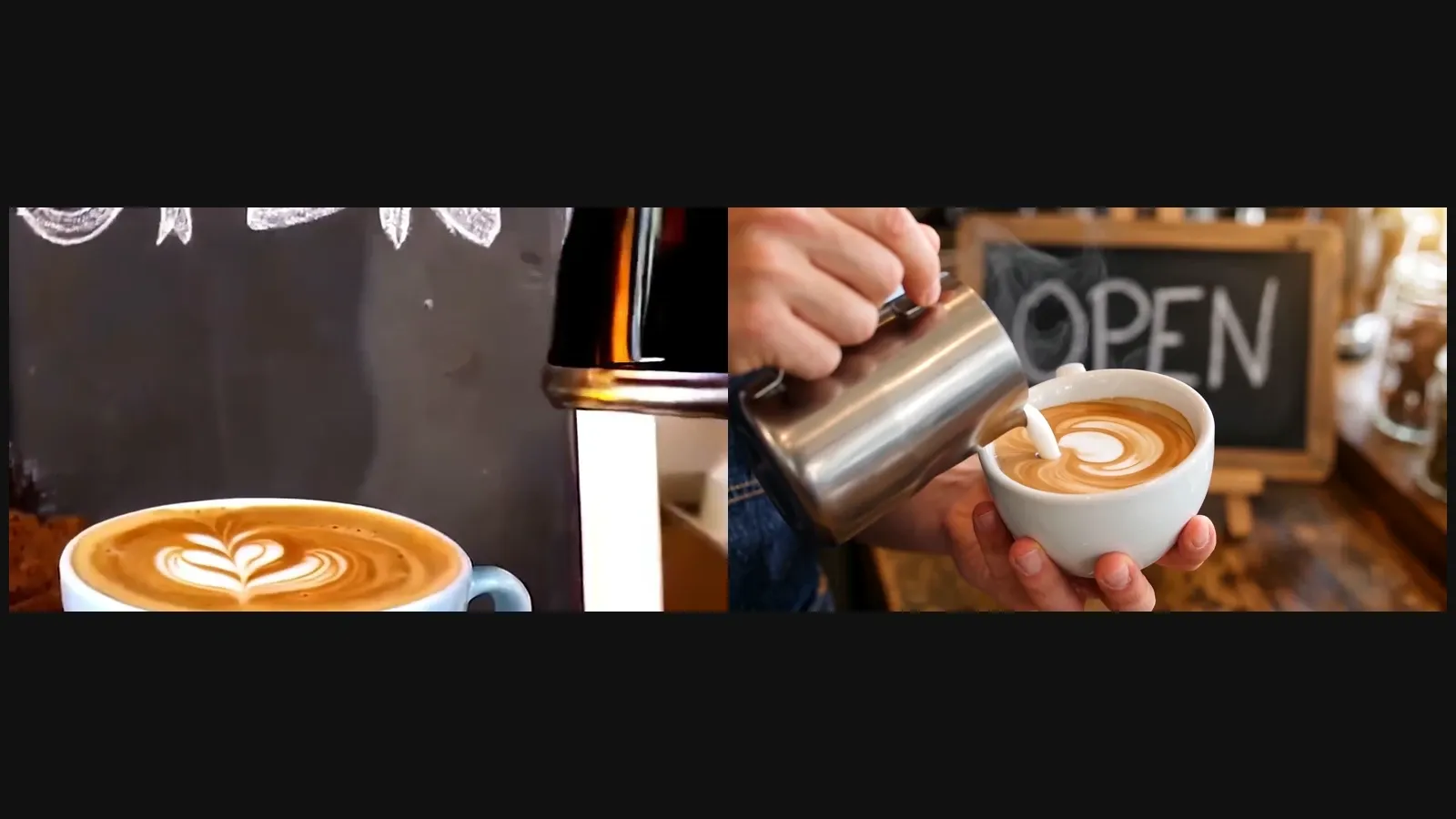
Live-action close-up of a barista's hands pouring steamed milk into a cup of espresso, forming a heart in the latte. Steam rises. A chalkboard behind reads OPEN. Static camera, warm morning light.
Wan 2.2 TI2V-5B ran on Replicate (wan-video/wan-2.2-5b-fast) at 480p. Wan 3.0 ran in Merlio's video studio on default settings. One clip each, so treat this as an anecdote, not a benchmark.
| Wan 2.2 TI2V-5B (open, Apache 2.0) | Wan 3.0 (API only) | |
|---|---|---|
| Output | 3.4 s, 832×480, 24fps, no audio | 4.0 s, 1920×1080, 30fps, no audio |
| Time | 49 s of GPU time | About 3 min from click to clip |
| Cost | Billed per GPU second; the API didn't show the bill. fal lists its own Wan 2.2 5B endpoint at $0.15 a video | 2,000 credits |
| Latte heart | Yes | Yes, cleaner |
| "OPEN" on the chalkboard | Missed. Doodles, no word | Readable |
| Hands | One hand, then the pitcher jumps to a different spot (and looks like a different pitcher) | Two natural hands, smooth pour |
| Steam | Barely there | Visible |


The two times aren't the same measure. 49 seconds is pure GPU time; 3 minutes includes the queue. Still, the open model is fast.
What it showed: the open 5B gets the main action right. You get a pour and a heart, quickly and cheaply. It falls apart on the details that make a clip usable: text in the scene, and continuity between frames. Wan 3.0 got every element of the prompt. If you're making B-roll for a vlog, the 5B is fine. If a client needs the sign to say what the brief says, it isn't.
Try the same prompt: Paste the barista prompt into the AI video generator and pick Wan 3.0, Kling 3.0 or Veo 3.1 to compare. None of these are open models. They're hosted, and video needs the Creator plan ($29.99/month, see pricing).
Should you self-host or use a hosted app?
The quality gap isn't what makes people quit open video. Setup is. Look at the threads: a ComfyUI bug report where "it tries to take over 100GB VRAM" (GitHub), and an NVIDIA forum post where "A simple 5-second I2V generation is taking 30+ minutes" on a Spark (NVIDIA forums). Workflows that ran yesterday fail after an update.
Self-host if:
- you already own a 24GB card (an RTX 4090 or similar) and like tinkering in ComfyUI
- you make lots of short clips and per-clip fees would add up
- you want to train LoRAs or keep footage off other people's servers
- you need a license you control. Wan 2.2 or MAGI-1 for Apache, LTX-2.5 if you need audio and qualify
Use a hosted API (fal, Replicate) if you want an open model in your own product without buying hardware. Same weights, pay per second. Watch the dates, though: fal says both its Wan 2.2 endpoints (5B and A14B) will be removed on January 4, 2027.
Use a hosted app if you just want the clip. You don't care whether the weights are public, you care whether the chalkboard says OPEN. That's where the closed models win right now. Merlio puts Wan 3.0 (about 2,000 credits for a 4-second clip), Kling 3.0 (about 2,240) and Veo 3.1 (about 4,000) in one picker, so you can run the same prompt on several and keep the best. To be clear, that's the opposite of open source: you rent the model, you don't own it. If you're shopping around, we also compared the best Sora alternatives, Kling AI alternatives and Runway alternatives.
How we checked
On November 25, 2026 we read each model's GitHub repo, Hugging Face card and license file, pulled the Wan-AI model list from the Hugging Face API, and noted fal.ai's list prices. We ran the one-prompt test above, one clip per model. Not verified: HunyuanVideo 1.5 and MiniMax H3 hosted prices, and how much VRAM MiniMax H3 needs at minimum (its Hugging Face repo holds about 464 GiB of files in total).